1800Hotline 030 // $1B with zero dilution, Hoka hits single digits, and a peanut butter billboard in Times Square
A 25-year-old superfood brand just raised from Shopify and Frito-Lay alumni. Plus a candy brand earns its Whole Foods shelf the hard way.
Hey DTC fam,
Beckham’s supplement brand just raised a billion dollars and gave up zero equity. The structure took me a minute to get my head around, so that’s the Big Story this week.
Also in here: Deckers had its first billion-dollar Q1 and got punished for it anyway, and an Australian peanut butter company bought a Times Square billboard to announce a launch that’s still four weeks out.
From Cart to Shelf is tomorrow night in NYC. 20 emerging CPG brands, tastings, a DJ, and a room full of founders and operators. Come through if you're in the city.
Let’s get into it.
Connect w/ the 1800DTC Community

This edition is presented by Klaviyo.
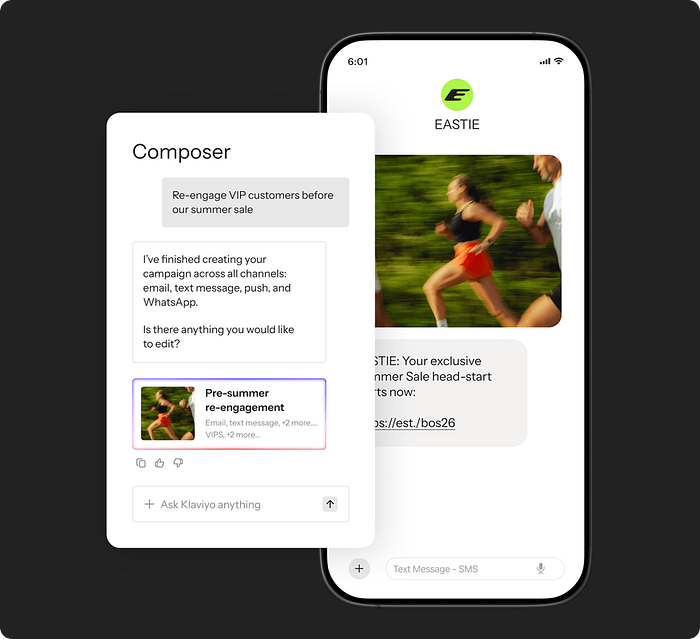
Klaviyo’s AI Marketing Agent, Composer, Is Now in Public Beta.
General purpose AI tools are everywhere. But getting them to work consistently with your brand and campaigns is a major headache.
Klaviyo Composer turns that around, connecting to everything already inside Klaviyo: your real customers, purchase history, flows, and live channels. It surfaces opportunities and prioritizes the biggest revenue impact.
Describe the outcome you want in plain language
Composer builds a complete campaign, grounded in your customer data and past performance, ready to review in minutes and published through Klaviyo
Bada bing, bada boom! We’re a team that loves easy.
Try “pre-summer reactivation for customers who haven’t purchased in 90 days, email and SMS, punchy tone.” It builds the audience, drafts channel-relevant copy, coordinates timing, and stages the send. You refine, approve, and nothing goes out without your final check.
New customers receive 10,000 complimentary Composer credits, available for up to 90 days. Not on Klaviyo yet? Hit that sign up below.
Courtesy of Klaviyo
Brand Feature: Dona
Courtesy of Dona
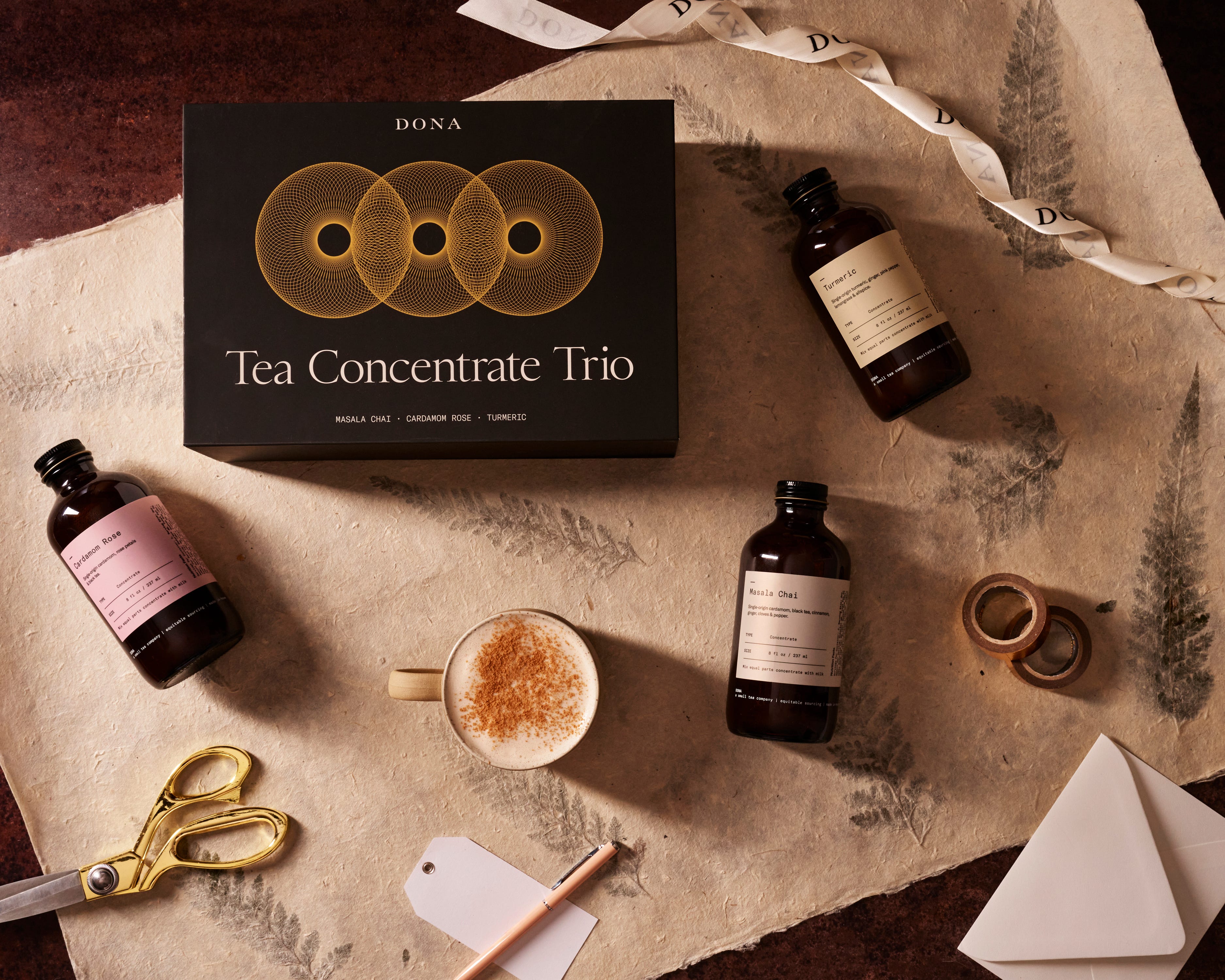
Dona has been doing tea the hard way since 2014: an independently owned Brooklyn company that direct-sources its teas, herbs, and spices from small-scale farmers, then brews and bottles everything under one roof. What started as an answer to the syrupy chai concentrates dominating NYC coffee shops has grown into a fixture on café menus well beyond Brooklyn, with sourcing standards that never budged along the way.
Now they’ve launched The Tea Concentrate Trio, a giftable box of miniature 8oz bottles of their three core concentrates. There’s the Masala Chai, just sweet enough to let the spices do the talking. Cardamom Rose brings together single-origin cardamom, a touch of pure rose, and whole-leaf black tea. And the Turmeric Concentrate, their Golden Latte formula, uses fresh-ground turmeric activated with black peppercorn, ginger, allspice, and lemongrass.
Shorter supply chain, more money in farmers’ hands, and a whole lot of flavor to show for it. We tried them all and love them! Super giftable.
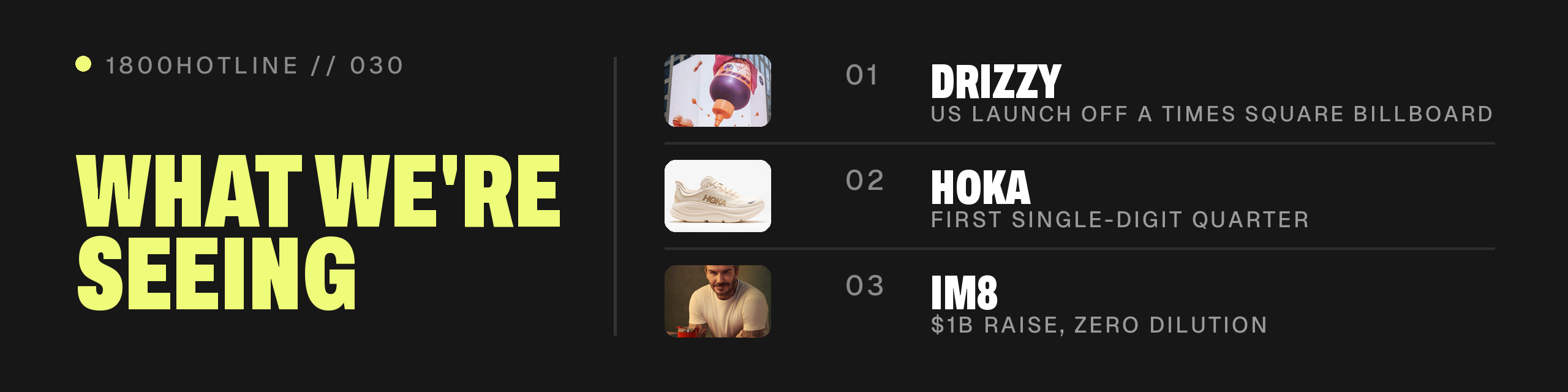
Drizzy is coming to the US on August 24.
The Australian brand sells peanut butter in a squeeze bottle, and it announced the date from a billboard in Times Square, which is a lot of money for a launch that hasn’t happened yet. The comments had been asking for a US launch for months. Drizzy could have flipped on international shipping and collected. Instead they reformulated around American-grown peanuts and stood up manufacturing here first. That’s a slower answer to demand than most brands would have the patience for.
Deckers cleared $1B in a first quarter and the stock fell 3% anyway.
Hoka was the problem: 7.7% growth to $703.5M, down from 14.5% last quarter and just under 20% a year ago. First single-digit quarter in a while. Read the channels before you call it, though. Hoka DTC was up 17% globally against 3% in wholesale. Mix moving toward the higher-margin channel is not the same condition as demand drying up, even when the top-line number looks the same.
→ Full story
BIG STORY: IM8 Raised $1B and Didn’t Give Up Any Equity
Prenetics, which owns David Beckham’s supplement brand IM8, closed $1B from General Catalyst’s Customer Value Fund. No equity, no warrants, nothing convertible.
The mechanics: General Catalyst funds up to 70% of IM8’s monthly marketing spend, and each month gets matched to the specific cohort of customers that spend brings in. Repayment comes only out of what those customers generate, capped at an agreed return per cohort. Past the cap, that revenue is IM8’s permanently. If a cohort underperforms, General Catalyst absorbs it and Prenetics owes nothing further.
What most of the coverage skipped is why IM8 qualified. Every monthly cohort since launch has beaten the thresholds written into the agreement, and General Catalyst diligenced them transaction by transaction. Across mature cohorts, every dollar into acquisition has come back as $1.44 of gross profit. Prenetics raised 2026 guidance to $210-220M on the back of it and is pointing at a $300M annualized run rate by year end.
Worth being clear-eyed about what this actually is. It’s structured finance against your CAC. It sits on the balance sheet as a liability and carries recognized interest expense. Non-dilutive doesn’t mean cheap. And it only holds together as long as the acquisition economics do, which means the growth and the obligation are both riding the same number.
The part I’d pay attention to is the diligence. Every monthly cohort, at the transaction level. Most brands would fail that review long before anyone got to terms, because the cohort reporting doesn’t exist in that shape. Capital priced against marketing spend is turning into a real category, and clean cohort data is the entry fee. Build it now, while nobody’s asking to see it.
Häppy Candy is going into Whole Foods out of the LEAP accelerator.
Select stores across the Northeast and South Pacific regions. For an emerging brand with no leverage, LEAP is one of the few doors into that chain that doesn't require a broker relationship you don't have yet. → More
Organic Traditions raised $10.5M, 25 years in.
The Toronto superfood brand's Series A came from angels out of Shopify, Frito-Lay, FreshPet, and Colgate-Palmolive, with second-generation founder Ally Mamalider running it now. Revenue up 70% over three years, and the plan is 1,500-plus new US doors against 6,000 stores already in Canada. Twenty-five years in business before the first institutional check. That's a longer runway than most founders would sit through. → More
Gymkhana and Kreatures of Habit are both headed into Sprouts.
Sprouts is still the natural channel's default first national test.→ More
Perfect Snacks is pushing new formats and leaning into ecommerce as sales climb.
Format work rather than line extension is a specific bet: same shelf space, more occasions to buy it. → More
RYSE is launching bottled protein shakes.
Powder first, then energy three years ago, now RTD. The cooler is crowded, though RYSE has a better claim to that shelf than most brands turning up in it this year. → More
Event Roundup

RSVP → Beyond The Feed | Air - July 28 | New York, NY | 6:30 - 8:30 PM ET
RSVP → From Cart to Shelf | 1800DTC — July 29 | 6 to 9 PM
20 emerging CPG brands, all in one room, all with product in hand. Tastings, founder conversations, drinks, bites, and a live DJ. It is the room where you meet the brands before they show up in your feed. Founders, investors, and operators.
RSVP → Sips ‘n’ Scoops: David x Poppi | July 29 to Aug 2 | New York, NY | 4 to 9:30 PM ET
RSVP → Consumer Perks | July 30 | New York, NY | 9 to 10:30 AM ET
RSVP → Not That Sweet x Lolo’s Pastry Pop-Up | July 31 | Fabrik, New York, NY | 4 to 7 PM ET
RSVP → UGLY TALK: WINNERS AND WIPEOUTS IN SOCIAL COMMERCE | July 31 | New York, NY | 6 to 8 PM ET
RSVP → Penthouse Happy Hour for CPG/Wellness | RetailReady x Locale | Aug 3 | Midtown, New York, NY | 7 to 9 PM ET
That is Signals for Issue 030.
General Catalyst read every monthly cohort at the transaction level before writing that check. Honest question: would your cohort reporting survive that review this week? Hit reply, I’m curious how many people would say yes.
See you Thursday.
— Zach and the 1800Hotline Team
Find a partner, tool, or agency: 1800DTC.com
Get connected with our partners: Brand Form
Newsletter
· weekly DTC intelligence