1800Hotline 028 // Levi's DTC hits 51%, Prime Day's value shift, and cat treats won the week
Plus Cann goes zero-THC, Yash Chavan's fix for affiliate fraud, and the full DotDev Toronto rundown.


Hey DTC Fam,
Levi’s proved DTC-first works at scale, the Prime Day numbers are in and they tell a very different story than the headlines, and OpenAI just made “talking to your AI shopping assistant” feel a lot less like science fiction. Oh, and two college grads just raised $1.1M to turn grass-fed beef into a Cheeto.
Plus: DotDev week kicks off in Toronto on Tuesday (we’ll be there), and From Cart to Shelf is less than two weeks out in NYC.
Let’s get into it.
Connect w/ the 1800DTC Community
The #1 Influencer Marketing Event for Brands on the East Coast...

#CELE
Influencer marketing budgets have surged 171% YoY. The industry is projected to reach $500 billion by 2030, with New York City driving a massive share of that investment.
What better time? What better place than the Big 🍎?
Creator Economy Live East hits the New York Marriott Marquis on July 29th, bringing the industry together to tackle the biggest questions around influencer marketing. Join Estée Lauder, Hinge, Ralph Lauren, e.l.f., AG1, AeroPress, Scrub Daddy, and hundreds of other brands under one roof for tactical sessions led by top industry voices.
Free passes for the first 500 brands have already SOLD OUT. Missed your chance? Not if you’re with 1800DTC. We secured a handful of free passes exclusively for brands in our community
The event is less than two weeks away. Grab yours today!
Claim one of the last free brand passes

Are Value-Hungry Shoppers Ditching DTC for Amazon?
With consumers aggressively hunting for the best deals, Amazon’s perceived trifecta of price, fast shipping, and easy returns here in 2026 looks like the ultimate value for shoppers lately.
If you’re a brand that does most of your business DTC but also has an Amazon presence, take a minute to tell us what you’re seeing.
Brand We’re Watching: Cann
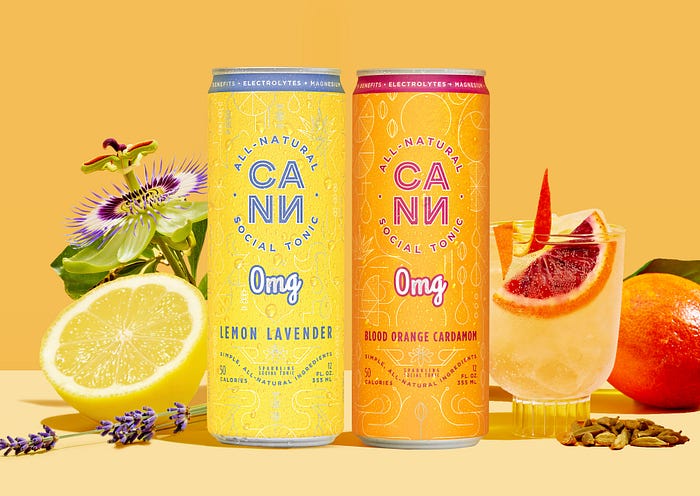
Courtest of Cann
Pronounced “OMG,” And Yes, That’s The Whole Point
Cann, the brand that basically built the microdosed THC beverage category, is launching its first-ever zero-THC line, expanding the social drinking experience to even more occasions.
0MG keeps everything people love about Cann, from the flavor-first approach to the elevated feel, and swaps the THC for a functional blend of magnesium, electrolytes, L-theanine, and passion flower. Hydration, mood boost, and a little edge-softening without the next-day regrets.
It debuts in two signature combinations: Blood Orange Cardamom and Lemon Lavender (both pictured above). The zero-THC formula also means Cann can ship nationwide for the first time, which is the biggest news here, opening the door to wider retail and a whole new set of drinkers.
“Debuting a zero-THC beverage, and taking a successful play out of alcohol’s book, gives us the opportunity to reach more consumers where they’re already shopping, expands our retail distribution, and grows our awareness to new heights.”
Jake Bullock, CEO and co-founder of Cann.
Live on their website now, hitting shelves in August. OMG indeed! Love it.
Unwrapped w/ Yash Chavan of SARAL (and now, SATHI)
Most affiliate platforms get paid when your dashboard looks good, even when the numbers are lies. Yash Chavan saw this up close.
After years helping e-commerce brands generate millions in influencer revenue through SARAL, he kept hearing the same complaint from serious operators: “I know this is working, but I can’t prove it to my CFO.”
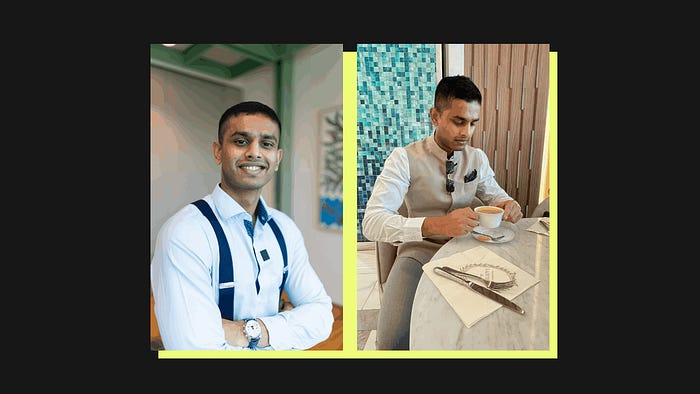
Yash Chavan of SATHI and SARAL
The problem cut both ways. Last-click attribution handed all the credit to whoever caught the final code, demotivating the creators building the brand. Meanwhile, fraud scans revealed a meaningful share of commissions going to leaked codes, self-referrals, and click farms.
So he built SATHI: cookieless multi-touch attribution, a proactive AI fraud engine, and an AI sidekick that runs program operations on autopilot.
Dive into the interview with Yash below to hear his story, or get more of his insights in The DTC Affiliate Playbook, a guest piece he authored for 1800DTC.
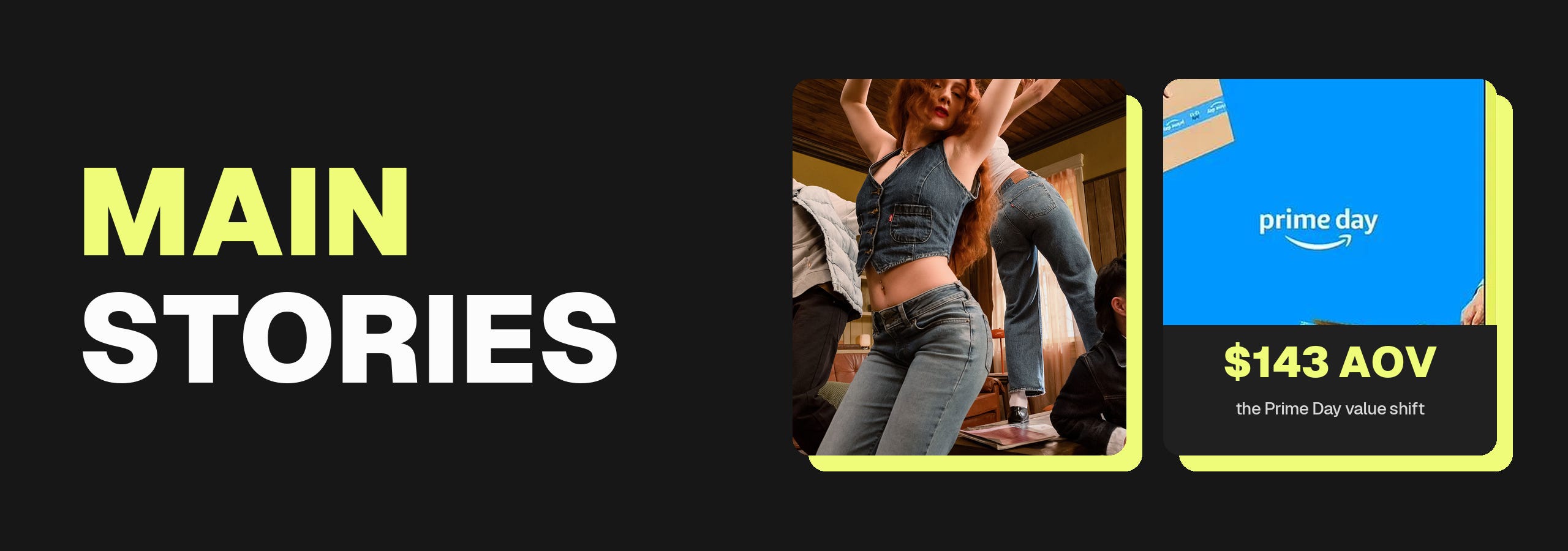
Main Story #1: Levi’s Just Made the Case for DTC-First
Levi’s reported Q2 on Wednesday and quietly delivered one of the strongest DTC proof points of the year. Ecommerce revenue jumped 19%, DTC comps grew 6% (the 17th straight quarter of comp growth), and DTC now makes up 51% of total company revenue. Total revenue hit $1.56B, up 8%, and the company raised full-year guidance for the second quarter in a row.
Here’s the part worth sitting with: that ecommerce growth came while Levi’s reduced promotional activity and raised average prices. CEO Michelle Gass credited a premiumized site experience and elevated online assortment, meaning more traffic, better conversion, and bigger baskets, all without leaning on discounts.
Ecommerce has grown nearly 60% over the past three years and still only represents about 12% of Levi’s total revenue, which Gass called “underpenetrated versus peers.” Translation: a 173-year-old denim company thinks its biggest growth lever is its own website. Take note.
The Prime Day Postmortem Is In (And It Sets Up Q4)
We covered the topline in 025: $26.4B in U.S. ecommerce spend across Prime Day week, up 9.3%. Now the behavioral data has landed, and it’s the more important story.
The record number hides a value shift. Average household spend dropped to $143.45 from $156.37 last year. Average item price fell to $23.23. Only 59% of shoppers said they were satisfied with the deals, down from 68% a year ago, even though discounts were basically flat YoY. The top-selling items? Premier Protein shakes, Liquid I.V., and Temptations cat treats. Prime Day has become an essentials stock-up event, not a splurge event.
The grocery angle matters most for brands. This was the first Prime Day with same-day grocery for members, and in markets where it operates, nine of the top ten sellers were fresh or perishable. Amazon isn’t doing this for egg margins. It’s building shopping frequency so it can capture more CPG ad dollars across its retail media network.
Analysts are calling this a holiday dress rehearsal: planned purchases over impulse buys, harder-to-please shoppers, and compressed timing with Prime Day now in June. If your BFCM plan assumes the 2023 consumer, rewrite it. (Also, tell us what you’re seeing in the poll above.)
OpenAI’s GPT-Live and the Voice Commerce Countdown
OpenAI launched GPT-Live last week, a new generation of voice models now powering ChatGPT Voice for its 150M+ weekly voice users. The upgrade is architectural: full-duplex, meaning it listens and talks at the same time like an actual conversation, while quietly handing complex tasks like web search and product comparisons to GPT-5.5 in the background. It can also surface visual cards mid-conversation.
Why should a DTC operator care about a voice model? Because the path from “compare these three sunscreens for me” to “okay, buy the second one” just got dramatically shorter. Voice removes the last bit of friction in AI-assisted shopping, and the underlying trend is already here: Adobe found AI-sourced traffic to U.S. retail sites is up 235% YoY through May, and during Prime Day that traffic converted 40% better than non-AI channels.
The practical takeaway isn’t “build a voice strategy.” It’s that your product feeds, reviews, and structured data are becoming your storefront for AI-driven discovery. If your data has gaps, the assistant compares you unfavorably or leaves you out entirely.
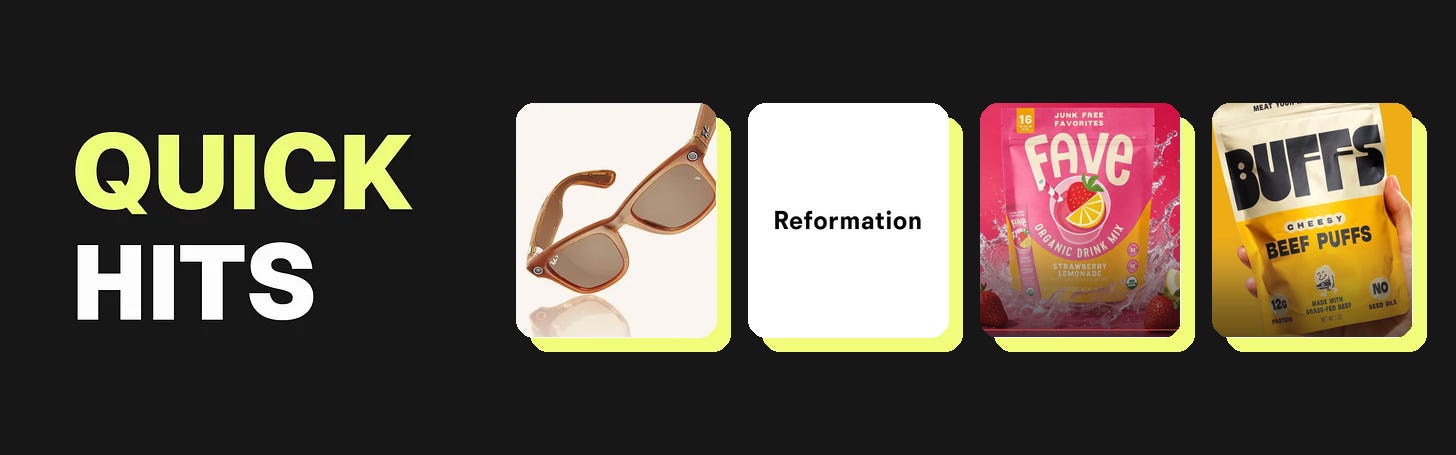
Meta launched glasses. Fashion insiders say it launched an accessories line.With the new Meta Glasses, some in the fashion world are reading Meta's hardware push as the company effectively starting its own fashion house. Meta's own VP of fashion told Glossy the company basically has its own accessories line now. Wearables are becoming a brand category, not just a gadget one, and that changes who eyewear and accessories brands are actually competing with.
FAVE just raised $1M to bring nostalgia back to the drink mix aisle.
The Supernatural Ventures-led round, same firm behind early Poppi and Goodles checks, comes paired with an exclusive national launch in nearly 500 Sprouts stores. Founder Ryan Raish, a 20-year CPG vet from Guayaki and popchips, spent two years reformulating the flavors you grew up on down to 6 grams of organic sugar, versus the 30 to 40 grams legacy mixes carry. In a category obsessed with function, betting on flavor might be the contrarian play that works.Walmart acquired Vibe.co, and retail media just got more crowded on your TV.Walmart's acquisition of the CTV ad platform, built for small and mid-sized advertisers, is the clearest signal yet that retail media and streaming TV are converging. For DTC brands, connected TV through retailer ad networks is about to get a lot more accessible, and a lot more competitive.
BUFFS closed $1.1M in pre-seed for the world's first beef puff.
Founded by two recent college grads, the brand puffs grass-fed beef into a Cheeto-style snack with 12 grams of protein and no seed oils, launching August 11th. Meat snacks have been stuck in jerky-and-sticks formats forever, so the innovation here is the form factor, not the ingredient. Watch how fast the pre-launch waitlist converts.Reformation's IPO watch is on. We broke down the filing in 025, and reporting now points to a targeted July debut on the NYSE under the ticker "REF," with J.P. Morgan and Morgan Stanley among the underwriters. If it prices well, it becomes the comp every profitable DTC brand references in fundraising conversations for the next two years.
Vacation is running it back with Pepsi. The nostalgia-core sunscreen brand is building on its Pepsi collab with a throwback summer giveaway, recreating the bottle-cap promos of the '90s and 2000s. A masterclass in squeezing a second act out of a hit collab instead of chasing a new one.
TikTok Shop is going global, and the playbook is localization. Brands expanding TikTok Shop into the U.K., Europe, and Japan say the key is tailored, market-specific campaigns rather than copy-pasting what worked in the U.S. If international is on your 2027 roadmap, TikTok Shop is quickly becoming the lowest-friction entry point.
Event Radar
Shopify DotDev Week, Toronto (July 21-24) - The whole ecosystem descends on Toronto next week. We’ll be there. The satellite calendar is stacked:
Partners & Paces: Fun Run + Breakfast - Almost-5k along the waterfront with Rebuy, Klaviyo, Electric Eye, and friends. Run is open to everyone, breakfast is RSVP only.
The DotDev Agency Brunch (formerly Editions) - Smile and Tapcart host at the Ace Hotel. Currently waitlist only, so move fast.
Cart Basel Morning Mixer - Cart Basel’s first Toronto event, a free walk-in mixer at Balzac’s Liberty Village.
dotdev Cowboy Corral - Tuesday night, hosted by Partner Meetup and Smarterships with a deep sponsor bench (Gorgias, Loop, Rivo, Domaine, and more).
Executive Shopify Partner Dinner at the CN Tower - Exclusive dinner with Consio, Shopifolk, and top agency leads.
Phoenix After Dark - Octane AI’s speakeasy night. Dim lighting, plush corners, no lanyards.
Matt & Trudy’s Ultimate DotDev Frat Party - The unofficial Friday wrap-up if you’re still standing.
From Cart to Shelf, NYC (July 29) - Our own night of product discovery and founder conversations, with the CPG brands you’ll be talking about next all under one roof. Less than two weeks out. Grab a spot.
DTC River Float, Salt Lake City - patrolapp.ai and friends float the Provo River, then dinner and drinks at Slackwater. No panels, no presentations, just a summer afternoon in Utah. Limited spots.
That’s a wrap for Field Notes this week.
The through line this week: the brands winning right now aren’t discounting harder, they’re getting sharper. Levi’s grew 19% online while pulling back promos. Prime Day shoppers rewarded planned value, not hype. AI is quietly rerouting how customers find you in the first place. And even at the earliest stage, FAVE and BUFFS both raised on the same idea: do one thing extremely well.
If you’re in Toronto next week for DotDev, come say hi. And if you’re in NYC on the 29th, you know where to find us.
See you Tuesday.
— Zach and the 1800Hotline Team
Find a partner, tool, or agency: 1800DTC.com
Get connected with our partners: Brand Form
Newsletter
· weekly DTC intelligence