1800Hotline 026 // A $3B brand buys its factory, 10 quarters of +100%, and a seltzer named Ciggy's
SCOTUS takes up a cold brew brand's fight with Pepsi. Uncle Nearest files Chapter 11. And a creator with 30M followers gets into cereal.


Hey DTC fam,
Protein had itself a week. Europe’s biggest bar brand decided owning the product wasn’t enough and went out and got the production lines too. Closer to home, a Detroit collagen bar brand tracking toward $50M made its Costco debut. And Nantucket just got a vodka seltzer engineered for the group chat.
Let’s get into it.
Connect w/ the 1800DTC Community

This edition is presented by DOSS.
230 U.S.-based operations, supply chain, and manufacturing leaders at CPG and physical goods companies in 2026 were surveyed.
Always keeping an eye on gaps brands are encountering, our team dived into the key takeaways from a recent DOSS benchmark report. Over the past year:
1 in 4 CPG product launches ran behind schedule
1 in 2 CPG ops leaders shipped product with incorrect labeling, packaging, or docs
And more than 1 in 3 CPG ops leaders made a significant business decision based on data that later turned out to be outdated or incorrect…
For many of you running brands, you know the story. This translated to cancelled launches or missed major retail windows. Costs then piled up.
The teams that were operationally efficient in the past year had a few things in common: improved cross-functional comms, AI adoption, and ERP upgrades, like with DOSS.
DOSS is the Operations Cloud built for real-world problems like these companies faced, helping operations teams adapt faster to volatility and make confident decisions. The flow of goods, dollars, and data across procurement, inventory, orders, and finance gets managed in real time. Check them out if there’s a fit!

Brand Feature: Stars + Honey- Launches at Costco
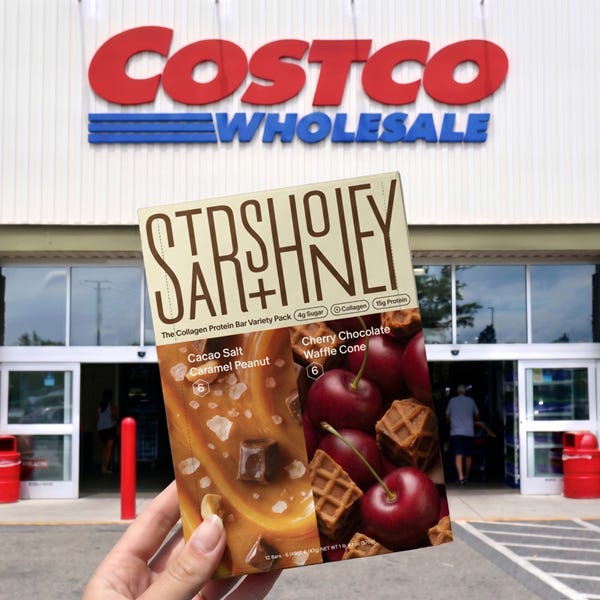
Stars + Honey just cracked its first club channel. The Detroit-based collagen protein bar brand is now in 40+ Costco locations across the Pacific Northwest region, including Utah, Oregon, Washington, Idaho, and Montana, with a custom 12-pack of Cherry Chocolate Waffle Cone and Cacao Salt Caramel Peanut for $19.99. The bars are also live on Costco.com in select markets and available same-day through Instacart.
The momentum behind this one is real. Founded in 2023 by Daniel Rainey, the brand grew 300% last year, landed a growth investment from VMG Partners last month, rolled into Target nationwide, and is tracking toward roughly $50M in revenue this year. Each bar packs 15g of protein plus collagen peptides in dessert-level flavors, with no gluten, dairy, soy, seed oils, or sugar alcohols.
Here is the detail worth noticing: all 18 flavors are developed by an in-house chef team and made in the brand’s own facility outside Detroit. Owning production is what lets a three-year-old brand ship that much flavor variety and move at that pace. Costco is the natural next test. Club members are famously value-driven, and velocity expectations there separate real brands from viral ones.
Explore their delicious flavors
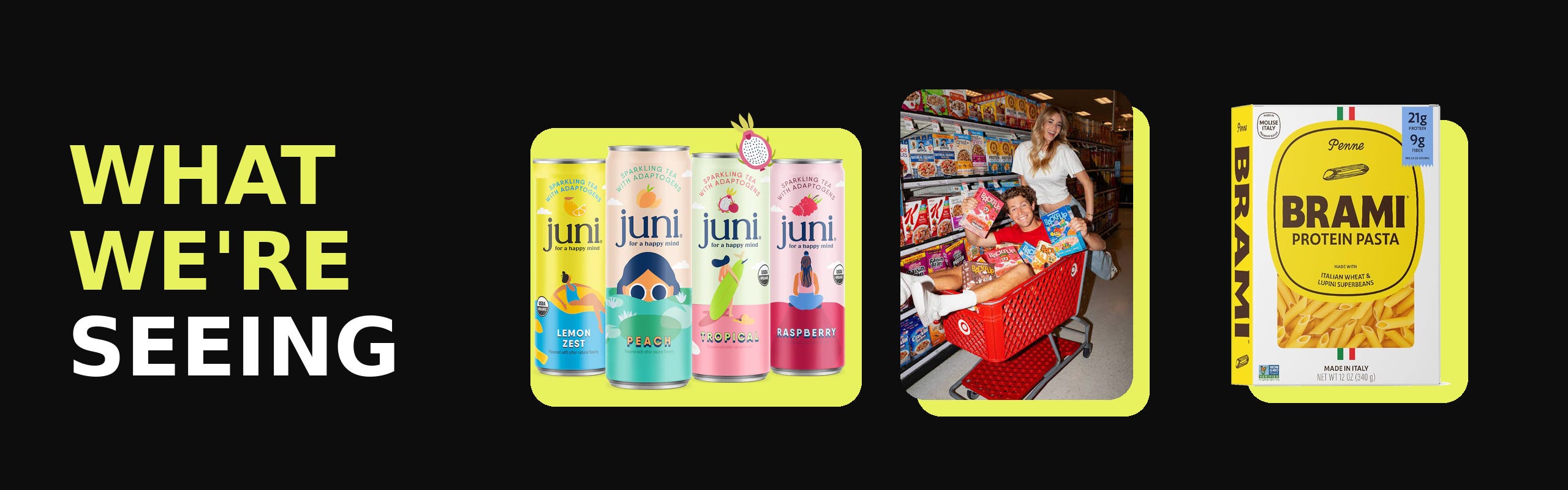
Juni just posted its 10th straight quarter of 100%+ growth. The adaptogenic sparkling tea from Jay Shetty, Radhi Devlukia, and Kim Perell is now in 8,000+ doors and launched a summer lemonade trio last week, on Amazon first with retail rollout to follow. Amazon as the early-access channel before shelves is quietly becoming a repeatable launch play. → Full story
A creator with 30M+ followers just launched a cereal brand. Backflip is the new clean cereal play from YouTuber Ben Azelart and Shaun Neff, the operator behind Sun Bum, BÉIS, Moon, and Pattern. No trade press yet, just a launch and a nationwide Target tease. Creator distribution plus a proven brand builder, aimed straight at the lane Magic Spoon opened. → Their launch post
Brami expects to grow 400% this year on the back of protein pasta. The Italian brand’s two-ingredient pasta (durum wheat and lupini bean flour) delivers 21g of protein per serving, and fresh capital is going straight into scaling its Italy-based production. Protein keeps eating new categories, and pasta was sitting right there. → More
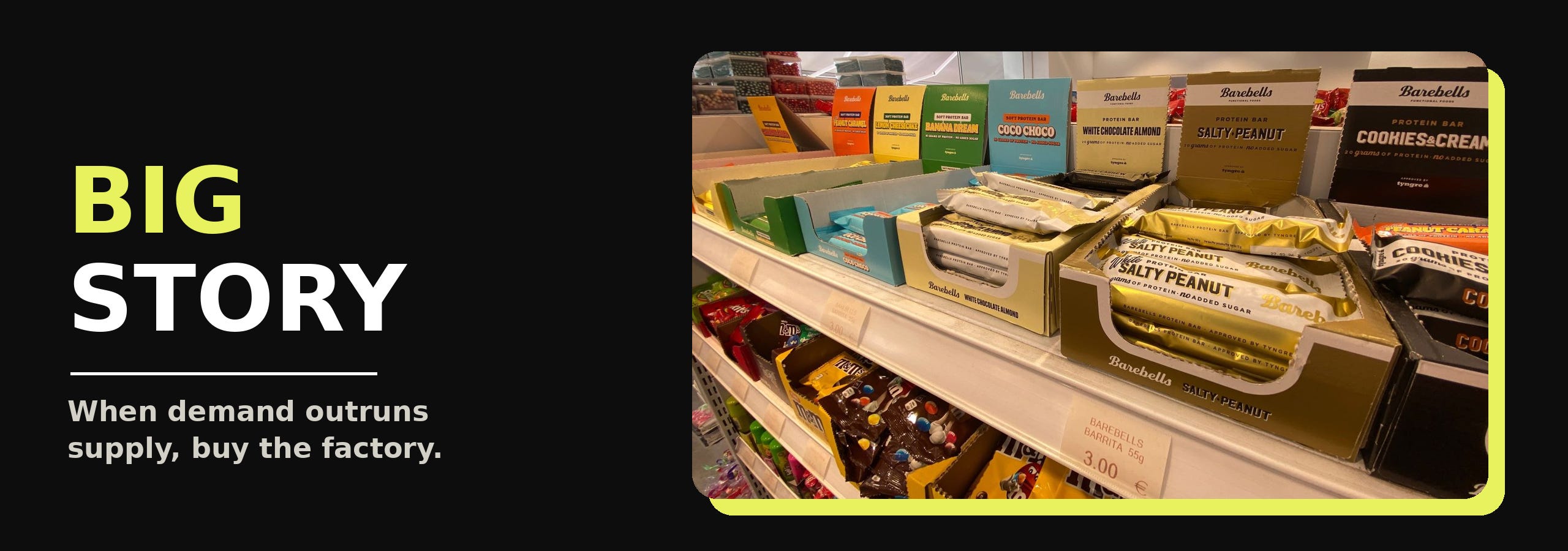
Vitamin Well Group, the Stockholm-based parent of Barebells, NOCCO, and Vitamin Well drinks, announced last week that it is combining with EMPWR, the Belgian manufacturer that has produced Barebells protein bars for years. Terms were not disclosed. Cinven, which backed Vitamin Well in 2024, leads the combined business, and EMPWR’s private equity owner Waterland keeps a minority stake.
Some scale for context. EMPWR is not a small co-packer. Four facilities across Croatia, the Netherlands, the US, and Canada. More than 1,500 employees. Fifteen production lines, up from one when Waterland took over in 2017. Over 100 brand customers globally, with Vitamin Well as the largest. And Vitamin Well itself is no scrappy startup: roughly €650M in revenue, products in 50+ markets, and a reported $3B valuation when Cinven came in.
The logic is simple once you see it. Protein is the hottest macro in CPG, and Barebells went from a niche CrossFit product to a mainstream brand sitting in retailers like Trader Joe’s. When your product sells faster than your manufacturer can make it, line time becomes the constraint on the entire business. Vitamin Well was already EMPWR’s biggest customer. Rather than compete with 100 other brands for capacity at its own supplier, it bought the supplier.
There is a wrinkle worth sitting with. EMPWR says it will keep serving its other customers, and existing contracts hold. But if you are a bar brand manufacturing there today, your co-man is now owned by the biggest bar brand in Europe. Your production schedule and your competitor’s growth plan now live in the same building.
The takeaway for operators: capacity is strategy, not procurement. Most brands treat their co-man like a vendor relationship. The brands scaling fastest right now treat manufacturing access like a moat. You do not need to buy a factory tomorrow. You do need to know exactly where you sit in your manufacturer’s priority stack, what your contract actually guarantees, and what happens to your line time the day their largest customer wants more.
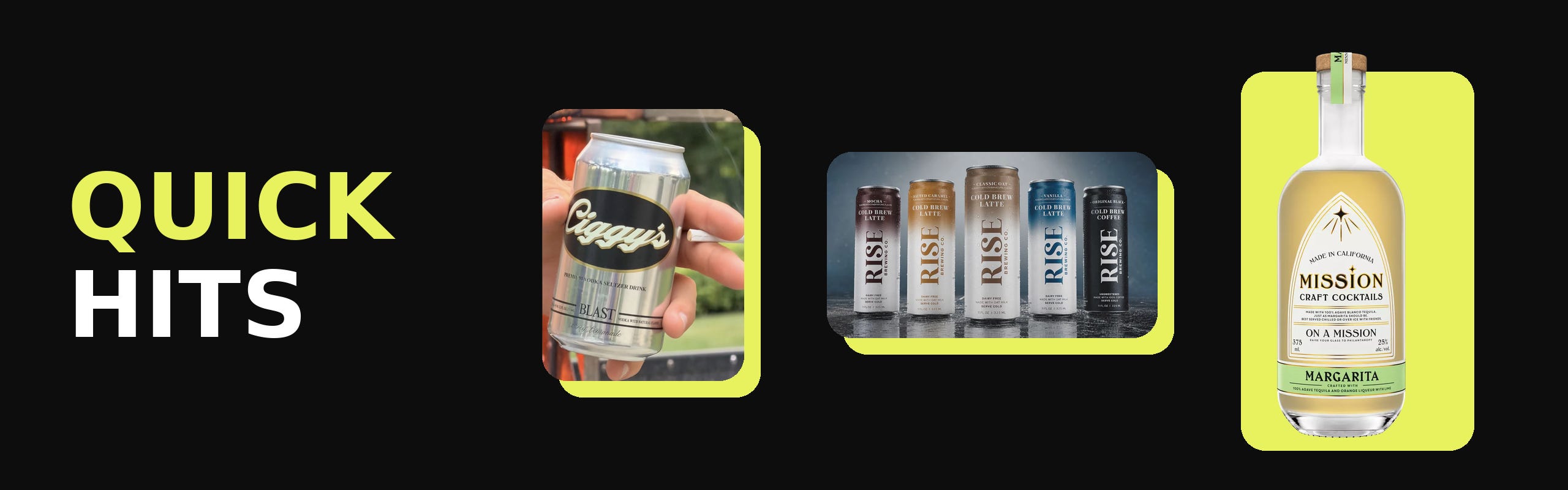
A vodka seltzer called Ciggy’s just launched on Nantucket. Retro silver cans, flavors like Spicy Pineapple and Cucumber Lime Salt, and a name built to get talked about. No press release, no wire coverage, just an island launch. That restraint looks intentional. It is the Loverboy playbook: start hyper-local in a wealthy summer social scene and let scarcity do the marketing. Watch whether it travels off-island. → More
The Supreme Court agreed to hear Rise Brewing’s trademark fight with PepsiCo. The cold brew brand has spent years battling Pepsi over the Mtn Dew Rise name, and SCOTUS just took the case up over the government’s objection. However it lands, the ruling becomes the precedent for every small brand that wakes up to a giant launching something with its name on it. → More
Mission Craft Cocktails went from 2,000 cases to 81,000 in one year. The Southern California RTD brand built on bar-strength cocktails with premium ingredients pulled off a 40x volume jump between 2024 and 2025, and the founders credit a high tolerance for risk over any single silver bullet. Growth like that in a crowded RTD field usually means the product is doing the selling. → More
Event Roundup
RSVP — The Buyer Changed. Your Checkout Didn’t. | July 8 | New York, NY | 8:30 - 10:30 AM Est
RSVP — DTC Rooftop Pizza Party | July 8th | Salt Lake City | 6pm - 8pm Mst
RSVP — Chicago Quarterly Ecom Happy Hour - Snack Run | July 9 | Chicago, Illinois | 5:30 - 8 PM Est
That is Signals for Issue 026.
Vitamin Well just spent real money to stop competing for line time at its own supplier. If you make a physical product, how confident are you in where you sit in your co-man’s priority stack? Hit reply, we want the good and the ugly.
See you Thursday.
— Zach and the 1800Hotline Team
Find a partner, tool, or agency: 1800DTC.com
Become a sponsor: Partner with us
Get connected with our partners: Brand Form
Newsletter
· weekly DTC intelligence